


June 23, 2025
Barrel aging is part of the distiller’s art. It’s a decision; much as a chef chooses their ingredients, the whiskey maker uses barrel aging to elevate the result and create a superior product.
Not only is cask aging a requirement for whiskey, but it is also part of what makes a whiskey unique, shaping its aromas, flavors, and color.
The age of the barrel (virgin oak or previously filled), the type of oak, the level of char, and how long the whiskey stays in the barrel all influence the final product, lending complexities and nuances that can be subtle or bold, but always intriguing.
Some whiskey brands, like Great Jones Distilling Co., develop a kind of blueprint to establish their house style, providing whiskey lovers and mixologists with a distinct go-to for sipping, cocktails, or notable moments. For whiskey-forward cocktails like the Manhattan, many feel there is no better choice… while the ones who know best (ahem) are 100% confident about it.
Bridget Ramsey, renowned bartender and winner of last year’s Great Jones Manhattan Bartender Contest, says, “The first rule of any Manhattan is that the cocktail should always showcase the whiskey. Recently, I’ve been reaching for Great Jones Rye Whiskey because it has this punchy rye spice up front, layered with subtle notes of vanilla, dried fruit, and a dry finish that plays really well with sweet vermouth and bitters.”
Barrel aging might sound like science—and there’s plenty of that behind it—but at its core, it’s a craft, a slow, patient transformation that gives whiskey its soul. From the spice Bridget tastes in her Manhattan to the deep amber hue swirling in your glass, every detail tells a story written in oak, time, and temperature. So today, let’s dive into what barrel aging is all about and learn why it’s such a crucial aspect of the whiskey-making craft.
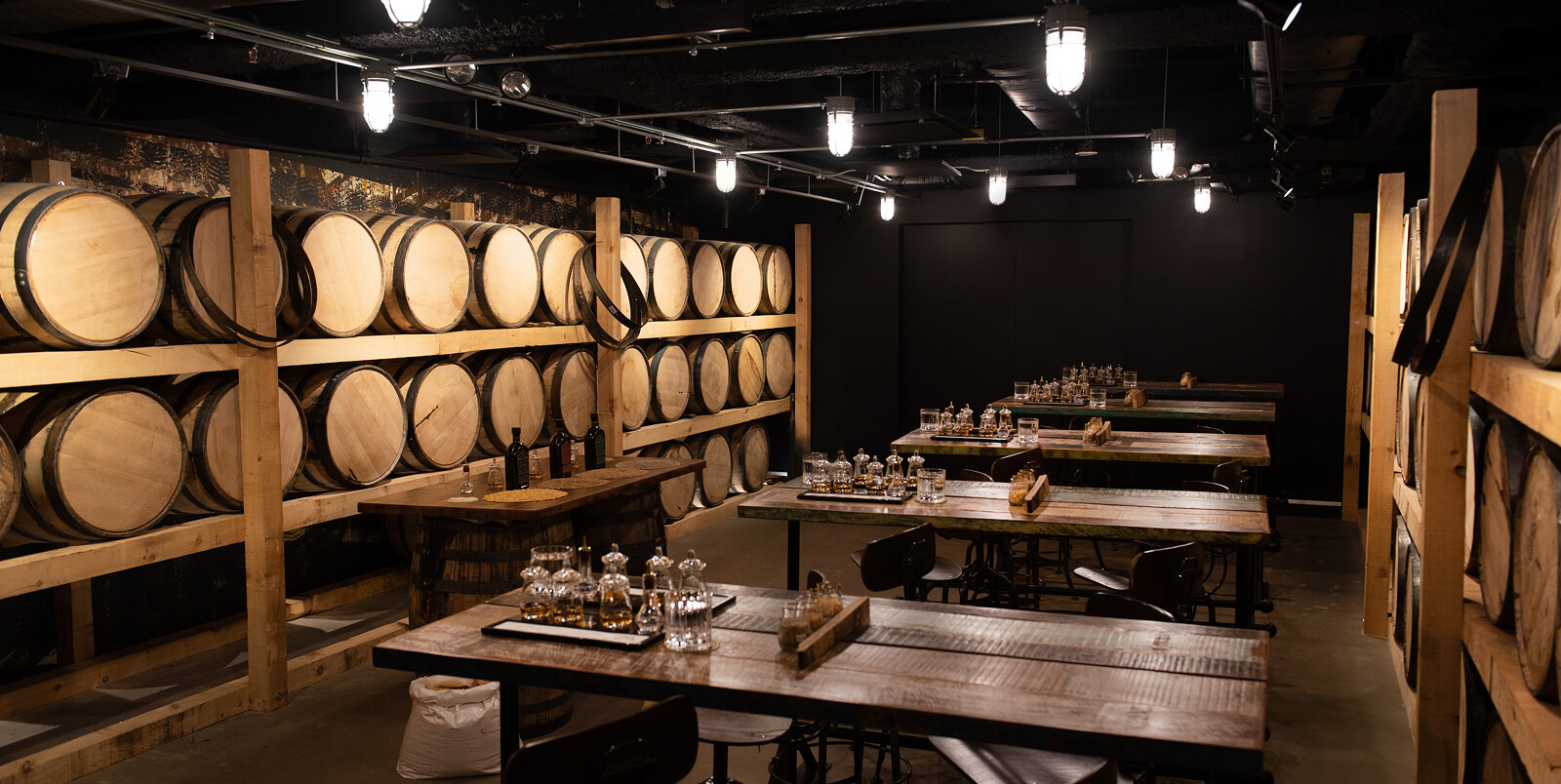
How Barrel-Aging Whiskey Influences the Finished Spirit
Barrels are pivotal in whiskey’s style, flavor, aroma, and body.
For bourbon, aging and maturation begins and ends in American oak barrels. During the cooperage (barrel-making) process, the barrel is briefly charred over a fire, changing the chemistry of the wood.
What does that mean? Interestingly, instead of making the whiskey taste smokier, charring reduces flavors you’d typically get from uncharred American oak (like coconut) and opens up the wood grain to intensify caramelized flavors of vanilla and toffee, which are absorbed by the whiskey as it ages.
Higher char tends to result in a darker-colored spirit that is drier, bolder, spicier, and more complex. Whiskeys aged in lower-char barrels tends to exhibit notes of coconut, vanilla, and cream soda and will be lighter in color and less intense.
Barrel Aging: Whiskey vs. Scotch vs. Rye vs. Bourbon
Different types of whiskey have unique barrel aging requirements dictating the minimum time the spirit must stay in the barrel.
The rules for bourbon require aging in charred new American oak barrels, but there is no specific aging requirement. On the other hand, Straight Bourbon must be aged at least two years. Barrel aging imparts oak character fairly quickly, but the longer the spirit stays in the barrel, the more integrated it will become. For example, Great Jones Straight Bourbon and Great Jones Wheated Straight Bourbon are both aged for four years, resulting in a perfectly balanced spirit and a seamless finish.
Scotch whisky can use casks of any age, though the whisky must rest in barrel for at least three years.
Rye whiskey has no barrel aging requirements unless it’s labeled as Straight Rye, which, like Straight Bourbon, must be aged for at least two years in charred new American oak barrels. At Great Jones, we treat it like our bourbon in line with our house style. Great Jones Rye Whiskey is aged for four years in American oak barrels, developing into a spicy, peppery, multi-layered spirit with a profile that speaks of New York’s Black Dirt Region, where our grains are sourced. As Bridget Ramsay says, “There’s a real sense of terroir in every sip”.
After the initial aging period required by law, scotch, bourbon, and rye whiskey can also be “finished” in barrels previously used for other liquids, like sherry, port, cognac, bourbon, or wine. Case in point, our Great Jones × Wölffer Estate Cask Finished Bourbon is finished in Wölffer Estate’s Cabernet Franc Barrique wine barrels, resulting in a unique flavor profile that distinguishes it from other whiskeys in our portfolio.

Book a Distillery Tour to Discover What barrel-aging is All About
Great Jones Distilling Co. is proud to be Manhattan’s first legal whiskey distillery since Prohibition—and we’re even prouder to be part of a new era for local whiskey. Our Straight Bourbon, Rye Whiskey and Wheated Straight Bourbon are crafted with care, aged in charred American Oak, and shaped by the hands and seasons of New York.
Curious about what makes whiskey, whiskey—or how whiskey vs bourbon vs Scotch vs rye really stacks up? The best way to learn is to taste it for yourself. Our immersive distillery tours walk you through every step, offering a firsthand look at how flavor, color, and character develop inside the walls of our NoHo distillery. Shop online to get Great Jones Whiskey delivered or use our store locator to find a bottle of Great Jones Straight Bourbon or Rye Whiskey near you, whether you’re in NYC, upstate, or in the tri-state area Better yet, book a distillery tour to take your newfound barrel aging knowledge out for a test drive and bring Manhattan’s spirit home!